
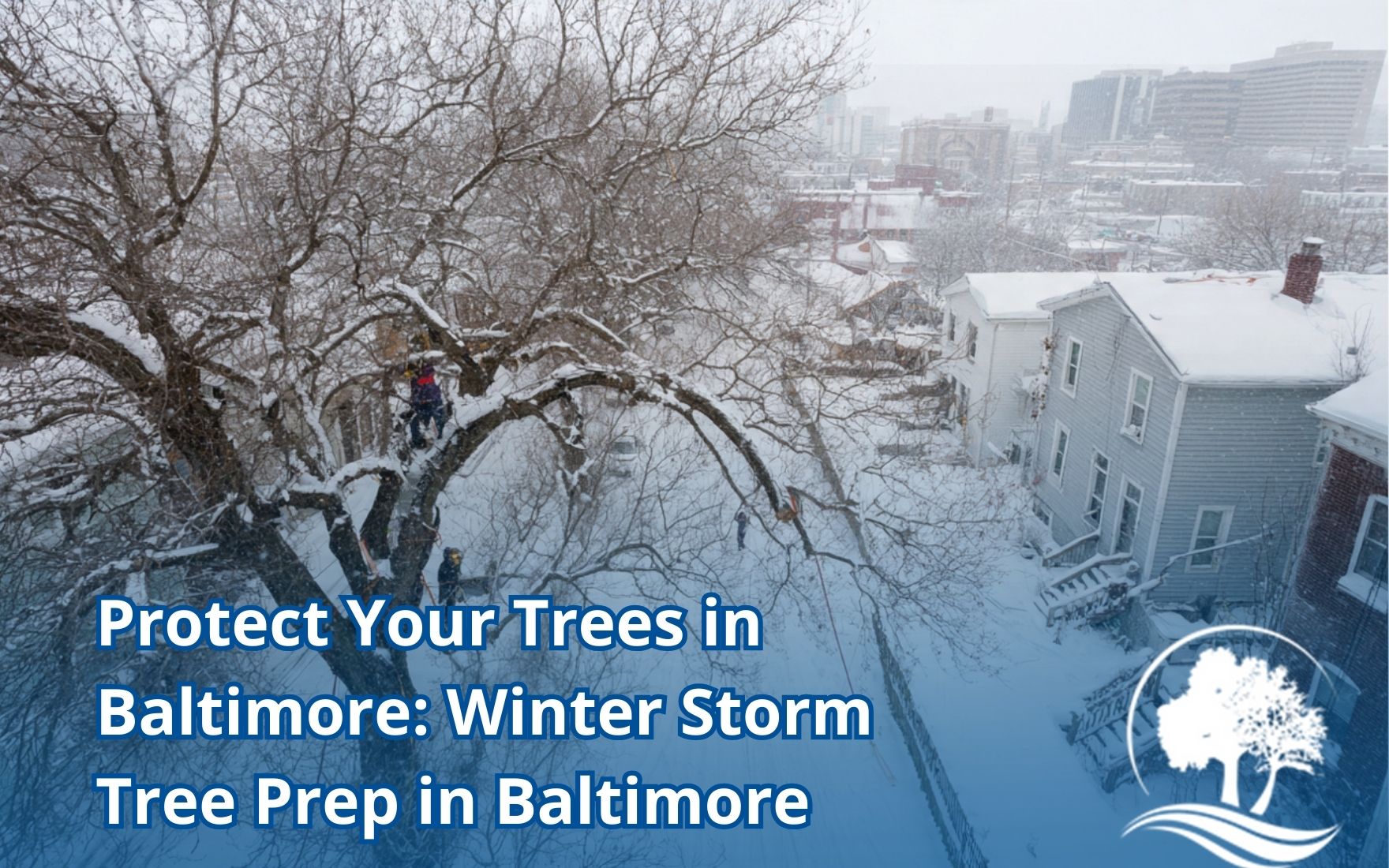
Winter storm tree prep in Baltimore helps your landscape stay strong during the cold months. As temperatures drop and skies turn gray, trees across Baltimore face harsh storms.
Snow and ice can break branches and split trunks. Therefore, a few early steps can prevent big problems and keep trees healthy and beautiful.
Baltimore’s tree canopy supports cleaner air and cooler streets. Because of that, protecting trees matters for your home and your neighborhood. This guide explains simple steps, from pruning to species care, so your trees can handle winter better.
Why Winter Storm Tree Prep Matters in Baltimore
Winter storm tree prep in Baltimore is not just yard work. Instead, it is a safety step for your home and community. Heavy snow and ice can overload branches until they snap.
- Reduce risks to roofs, cars, and fences
- Lower chances of downed limbs near power lines
- Keep sidewalks and driveways safer
- Support the long-term health of the local tree canopy
In addition, a well-shaped tree can block winter winds and help with comfort around your home. If you want a seasonal plan that fits Baltimore properties, explore seasonal tree maintenance in Baltimore.
Check Tree Health Before Cold Weather
Before storms arrive, walk your yard and check each tree closely. Preparing trees for winter storms starts with spotting weak points early. Look for dead limbs, trunk cracks, and fungus near the base.
Also check the root area for soil lifting or exposed roots. If a tree leans more than before, take it seriously. Because snow and ice add weight unevenly, an unbalanced canopy can fail faster.
For a broader care checklist that supports year-round strength, review tree care in Baltimore.
Pruning for Stronger Trees in Storm Season
Protecting trees from snow damage often begins with smart trimming. Remove dead, weak, or rubbing limbs so they do not break during ice events. Also aim for an even canopy, so weight does not build on one side.
- Cut weak and dead branches first
- Thin crowded areas for better airflow
- Keep branch spacing balanced across the canopy
- Use clean, sharp tools for smooth cuts
For winter storm pruning tips, avoid leaving stubs. Instead, cut just outside the branch collar, so the tree can seal the wound better. If you need help shaping trees safely, see tree pruning.
Tree Types That Need Extra Care in Baltimore Winters
Not all trees handle storms the same way. Winter storm tree prep in Baltimore works best when you focus on trees with weaker wood or heavy winter load. For example, silver maples and willows can break more easily under snow.
Evergreens, like pines and spruces, catch more snow because they keep needles all year. Therefore, light shaping can help reduce buildup. Meanwhile, leafless trees can still split bark during quick temperature swings.
If you want more cold-season guidance that fits local conditions, read tree care during winter.
Mulching to Protect Roots From Freeze and Thaw
Winter storm tree prep in Baltimore should include root protection. Mulch helps keep soil temperature steadier, so roots face fewer harsh swings. It also helps hold moisture when trees drink less during winter.
- Apply 2–4 inches of organic mulch
- Make a donut ring, not a mulch pile
- Keep mulch a few inches away from the trunk
- Refresh mulch if it breaks down over time
Because mulch against the trunk can trap moisture, keep the base clear to reduce rot and pests.
Support Options: Cables, Braces, and Safe Staking
When ice loads hit, limbs can bend and split. Therefore, support systems can lower stress in key areas. For mature trees with heavy limbs, cables can reduce movement in high winds.
Young trees may benefit from gentle staking. However, use soft ties and place stakes outside the root zone. Then check ties during winter and remove them in spring. This approach helps trees grow stronger over time.
If you are planning storm-focused improvements, visit storm damage prevention for ideas that reduce winter risks.
Wrap Trunks to Reduce Cold Damage
Wrapping trunks can protect thin bark from sun injury and sudden cold swings. It can also discourage rodents during food-scarce months. Use breathable wrap or burlap from the base up to the first main limbs.
After winter, remove wraps early in spring. Otherwise, trapped moisture can cause bark problems. This step is especially helpful for young trees and sensitive species.
Frequently Asked Questions
When should I start winter storm tree prep in Baltimore?
Start in late fall, before the first heavy snow or ice. That way, small fixes are easier and safer.
How do I reduce snow load on branches during a storm?
Use a broom to tap snow off gently, working from lower branches upward. Never shake icy limbs hard.
What are common signs a tree is unsafe before winter?
Look for dead limbs, trunk cracks, mushrooms near the base, and fresh leaning. These can signal weakness.
Do evergreens need different winter care than deciduous trees?
Yes. Evergreens catch more snow, so light shaping and careful monitoring can help reduce bending and breakage.
When should I call a professional for winter tree risks?
Call if limbs hang near power lines, large cracks appear, or a tree seems unstable. Pros can reduce hazards safely.
Watch Trees During and After Winter Storms
Winter storm tree prep in Baltimore continues after storms arrive. After snowfall or ice, inspect your trees for splits, hanging limbs, and new cracks.
Also clear snow gently, so branches do not snap. If you see damage that could fall, act quickly. Finally, if you need expert help for risky limbs or structural problems, contact Dream Tree Service LLC through the contact page.
Keep Your Baltimore Trees Strong All Winter
Winter storm tree prep in Baltimore pays off in safety, curb appeal, and long-term tree health. By assessing tree health, using pruning, and supporting roots, you reduce storm damage risk.
Preparing trees for winter storms also helps neighborhoods stay greener and safer. Protecting trees from snow damage is easier when you act early and check trees after storms. Use these winter storm pruning tips now, so your landscape stays resilient through Baltimore’s cold season.