
Old stumps can affect mowing, planting, safety, and yard plans. At Dream Tree Service LLC, we help Maryland homeowners understand their stump choices clearly before they decide what should happen next.
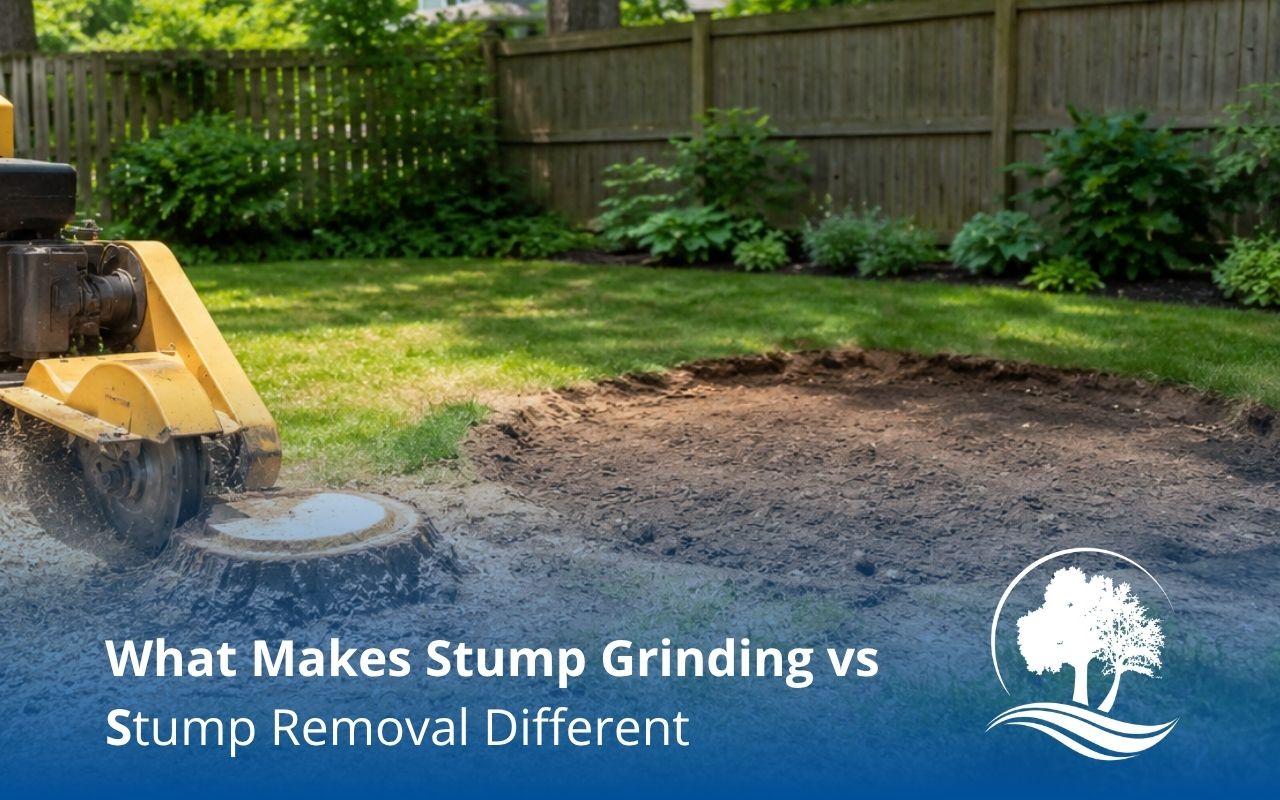
What Makes stump grinding vs stump removal Different
Stump grinding vs stump removal differs by depth. Grinding cuts the visible stump below the soil, while removal pulls out the stump and main roots. Grinding supports faster surface cleanup, while removal supports deeper clearing for planting, building, or major yard changes.
Stump grinding vs stump removal means choosing between cutting a stump down or taking it out fully. Homeowners need this choice after tree cutting, yard damage, or landscape changes. It helps solve trip risks, mowing trouble, pest concerns, root clutter, and blocked outdoor space.
Compare Stump Methods For Safer Maryland Yard Decisions
Stump grinding clears the visible wood with less digging, while stump removal clears more underground material. Therefore, the better choice depends on your yard goal, stump location, soil condition, and how much ground disturbance you can accept.
With grinding, a machine cuts the stump into small wood chips. Then the area can be covered with soil, seed, or mulch. With removal, the stump and main root ball come out. As a result, the area is more open for future work.
- Choose grinding for visible cleanup and easier mowing.
- Choose removal when roots block a planned project.
- Review access if the stump is near fences or hard surfaces.
- Plan aftercare when the ground needs soil and seed.
| Stump Choice | Best Fit For Maryland Yards |
|---|---|
| Grinding | Visible stump cleanup, easier mowing, mulch cover, and less soil disturbance. |
| Removal | Deeper clearing, root ball removal, future building, or planting in the same spot. |
According to the USDA Web Soil Survey, soil maps are available for more than 95 percent of U.S. counties. Therefore, local soil conditions can affect yard work decisions.
Choose Grinding For Faster Surface Cleanup With Less Disruption
Grinding is often practical when the main goal is to hide the stump and make the lawn easier to use. It usually disturbs less soil because the main root system stays underground and breaks down over time.
Many homeowners who want to grind stump in Maryland need a simple way to remove the visible obstacle. Dream Tree Service LLC checks stump size, access, nearby roots, and surface condition before explaining this option.
Grinding works well for open lawns, garden edges, and older stumps. Also, wood chips may help cover natural areas when they fit the yard plan.
- It helps reduce trip risks in active lawn areas.
- It makes mowing easier around the old tree spot.
- It improves the look of the yard with less digging.
- It works when roots do not block future plans.
Key Takeaway: Grinding handles the visible stump with less disruption, while removal clears more material for bigger future changes.
Select Removal When Roots Block Future Outdoor Projects
Full removal makes more sense when roots could stop your next project. If you plan to build, level, install posts, or plant in the same spot, removing the stump and main root ball gives the area a cleaner start.
A tree stump in MD may sit near clay soil, older roots, fences, walkways, or drainage areas. Because of that, removal may need more digging and cleanup. However, the finished space can support a stronger long-term plan.
Dream Tree Service LLC reviews the stump position before explaining removal. We also explain whether the hole may need soil, leveling, or reseeding after the work.
Review Maryland Conditions Before Scheduling Stump Work
Maryland soil, slope, moisture, and access can change the best stump plan. Wet ground may make digging messy, rocky areas may slow removal, and tight spaces may make grinding easier than pulling a full root ball.
Local conditions matter because every yard handles equipment differently. For example, soaked soil can rut more easily. Also, roots near patios, fences, and underground lines need careful planning before machine work begins.
The Maryland Office of People’s Counsel says homeowners should call Miss Utility: 811 before digging anywhere in the state. In addition, one out of every three underground utility damages happens when people dig without calling 811.
Key Takeaway: Removal is better for deep clearing, but Maryland soil and utility planning can affect the safest method.
Estimate Cost Factors Without Choosing By Price Alone
Stump removal cost in Maryland depends on more than the stump itself. Size, root spread, age, access, soil type, cleanup needs, and nearby structures can all affect how much work is needed for a safe result.
A small stump in an open lawn is usually simpler than a large stump near a fence or slope. Also, grinding and removal use different effort levels because one cuts wood while the other removes more material.
Dream Tree Service LLC explains the work factors in plain language. This keeps stump options explained around use, safety, and yard goals instead of only cost.
Protect Your Yard From Hazards Before Work Begins
Safety starts before equipment enters the yard. A stump can hide in tall grass, damage mower blades, attract insects, and create uneven footing. Therefore, the work area should be checked, cleared, and planned carefully.
The University of Maryland Extension explains that large tree work and work near power lines can be dangerous. Therefore, homeowners should understand nearby hazards before planning stump-related cleanup.
Before stump work begins, move outdoor items, keep children and pets away, and point out sprinkler heads, lights, or known underground features.
- Mark tight spaces, slopes, fences, and nearby hard surfaces.
- Move toys, hoses, planters, and lawn furniture.
- Keep people and pets away from the work area.
- Ask how chips, soil, and holes will be handled.
Key Takeaway: Cost depends on access and work depth, while safety depends on planning the stump area before equipment is used.
Prepare The Area After The Stump Is Gone
Aftercare helps the repaired area settle smoothly and look natural again. Grinding often leaves chips mixed with soil, while full removal usually leaves a larger hole that needs soil, leveling, and a plan for grass or landscaping.
After grinding, some chips can stay as mulch. However, too many chips may slow lawn repair. Fresh soil and seed can help the spot blend back into the grass.
After removal, the hole may settle over time. So, extra soil may be needed later. Dream Tree Service LLC helps homeowners understand what the area may need after a tree stump in MD is handled.
Frequently Asked Questions
How do I know if grinding is enough for my yard?
Grinding is often enough when you only need the visible stump gone. It works well for mowing, lawn repair, and basic cleanup. You can review our service details to understand how this method works.
When should I choose full stump removal instead?
Choose full removal when you need the root ball out for planting, building, or leveling. This option gives you more open soil space. For more context, you can use our question form.
What happens if I leave an old stump alone?
An old stump can become a trip risk, mowing obstacle, pest area, or planting problem. Over time, the wood breaks down unevenly. Therefore, grinding or removal often makes the yard safer and easier to use.
Why is Maryland soil important for stump work?
Maryland yards may have clay, rocks, slopes, or wet soil. These conditions can affect digging, access, and cleanup. A simple site check helps decide whether grinding or removal is cleaner.
How do I plan around stump removal cost in Maryland?
Start by looking at stump size, access, roots, soil, and cleanup needs. Then choose the method that fits your long-term use. You can share yard details through the information request page.
Start Your Clean Yard Plan With Clear Guidance
The right choice should match your yard, not a one-size answer. After comparing stump grinding vs stump removal, review the stump location, soil, roots, and future use. For simple guidance, use our contact page.