
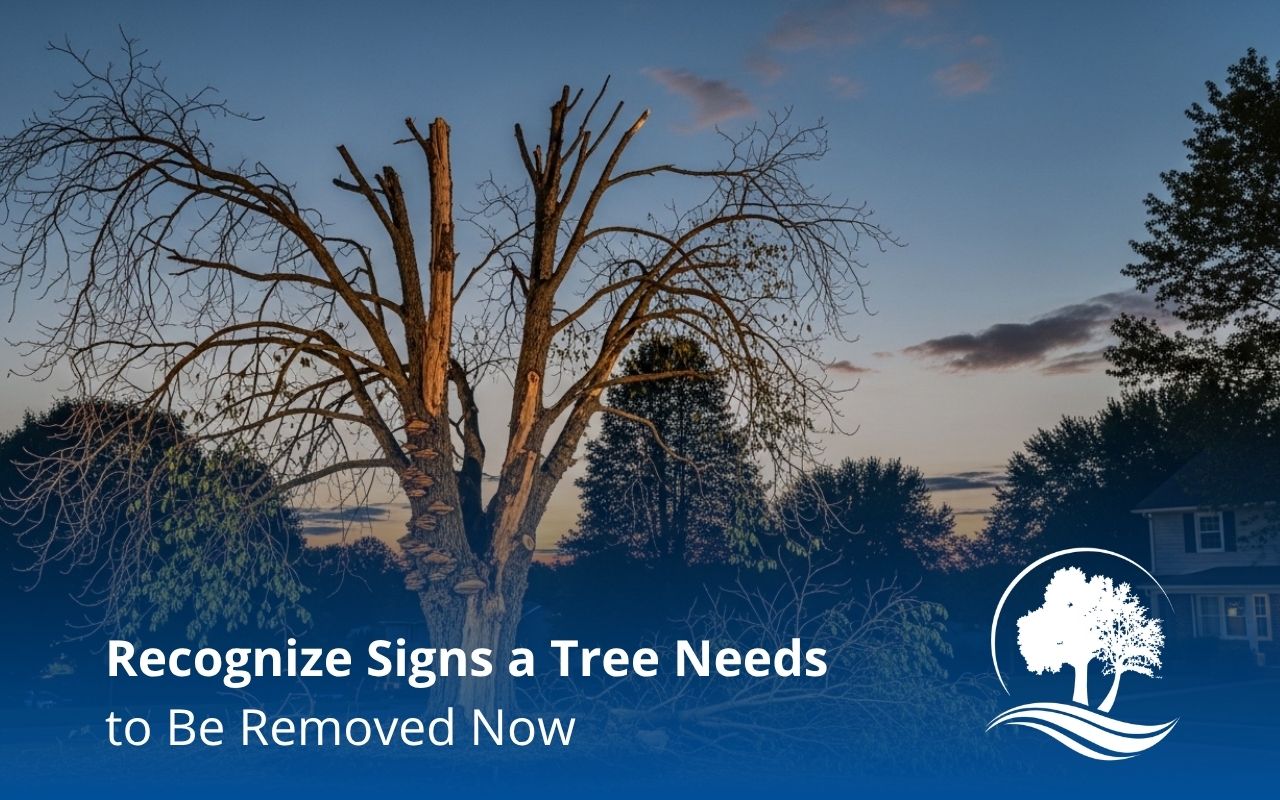
Standing in your yard, you may not always notice the trees around your home. Still, they play a big role in safety, shade, and curb appeal. When a tree starts to fail, it often gives warning signs before it becomes an emergency.
At Dream Tree Service LLC, we help homeowners spot the signs a tree needs to be removed before storms, disease, or weak roots cause serious damage. By knowing what to look for, you can protect your home, your family, and the rest of your landscape.
Dead Branches and Decaying Wood
Dead branches are one of the clearest signs a tree needs to be removed. When limbs lose leaves outside the normal season, bark peels away, or wood starts to crumble, the tree may already be weak inside.
Decaying wood can also invite insects, moisture, and disease. Over time, these problems may spread from one limb to the trunk, turning the tree into a hazardous tree that can drop branches without warning.
- Large dead limbs hanging over your roof, driveway, or walkway
- Mushrooms or shelf-like fungus growing on the trunk or base
- Soft, hollow, or cracked wood near major branches
- Bark falling away in large sections
When these signs appear, dead tree removal may be the safest option. Our team can inspect the damage and explain whether pruning is enough or removal is the better choice.
Leaning Trunks and Shifting Soil
A tree that leans slightly may not always be a problem. However, a sudden lean or a trunk that keeps moving can mean the roots or lower trunk are no longer holding the tree well.
Soil lifting on one side, cracks in the ground, or exposed roots can show that the tree is losing support. In these cases, knowing when to remove a tree can help prevent damage during heavy wind or rain.
Dream Tree Service LLC looks at the tree’s angle, nearby structures, and root condition before recommending the safest next step. A leaning tree near a home, garage, fence, or power line should never be ignored.
Root Damage Around the Base
Roots keep a tree stable and healthy. When roots are cut, crushed, buried, or affected by disease, the tree may begin to decline even when the upper branches still look normal.
Root problems can happen after construction, soil changes, drainage issues, or long-term decay. Because much of the damage happens underground, small surface clues can be very important.
- Soil heaving near the trunk
- Dead or dry roots visible above the ground
- Loose soil around the base after rain
- Fungal growth close to the root flare
- New cracks spreading from the trunk area
When roots can no longer support the tree, removal may be needed before it falls. This is especially important for large trees close to patios, driveways, or homes.
Fungal Growth and Pest Activity
Fungus and pests often appear when a tree is already weak. Bracket fungus, soft spots, holes in the bark, sawdust piles, or oozing areas can point to decay inside the trunk.
These may also be signs diseased tree in Maryland homeowners should take seriously. Once disease or insects spread through the tree, the wood can weaken and become unsafe.
Early action can also protect nearby healthy trees. If the issue is limited, trimming or care may help. If the damage is deep, removal may be the safest way to stop the risk from growing.
How Close Is the Tree to Your Home?
Location matters when deciding when to remove a tree. Even a living tree can create trouble if branches rub against the roof, hang over power lines, or grow too close to the foundation.
Branches can damage shingles, siding, windows, and gutters during storms. Roots may also lift sidewalks, crack driveways, or push into weak areas near the home.
If a tree is too close to your property, our tree removal services in Annapolis MD can help you plan safe removal before the problem becomes urgent.
Professional Tree Assessment and Safe Removal
A trained tree team can confirm whether the signs a tree needs to be removed are serious or manageable. We inspect the trunk, roots, canopy, bark, and nearby risks before giving clear advice.
At Dream Tree Service LLC, we use safe removal steps to protect your yard and nearby structures. Every property is different, so the plan should match the size, location, and condition of the tree.
- We check the tree for decay, cracks, lean, and root problems.
- We plan safe cutting and lowering steps before work begins.
- We remove branches and wood in a controlled way.
- We clean the work area so your yard is safer and easier to use.
For local help, you can explore our tree removal services in Perry Hall MD, tree removal services in Pikesville MD, and tree removal services in Towson MD.
Frequently Asked Questions
What are the most common signs a tree needs to be removed?
Common warning signs include dead branches, a strong lean, trunk cracks, fungal growth, root damage, and large hollow areas. These problems can make the tree unsafe, especially during storms.
When should I call for dead tree removal?
You should call when a tree has no healthy leaves, dry brittle limbs, peeling bark, or visible decay. Dead trees can fall without much warning, so fast action is safer.
Can a diseased tree be saved?
Some diseased trees can be treated if the problem is found early. However, if decay has reached the trunk or roots, removal may be the safer choice.
Is a leaning tree always dangerous?
Not every leaning tree is dangerous, but a sudden lean is a concern. Soil movement, lifted roots, or leaning toward a structure should be checked by a professional.
How do I know when to remove a tree near power lines?
You should seek professional help if branches are close to power lines or touch them during wind. Never try to trim or remove these trees on your own.
Schedule Safe Tree Removal With Our Team
Prompt action can stop a hazardous tree from becoming a costly emergency. When you notice the signs a tree needs to be removed, it is better to ask for help before weather or decay makes the risk worse.
Dream Tree Service LLC is ready to inspect your tree and recommend a safe solution for your property. To speak with our team, visit our contact page for tree removal help and tell us what you are seeing in your yard.