
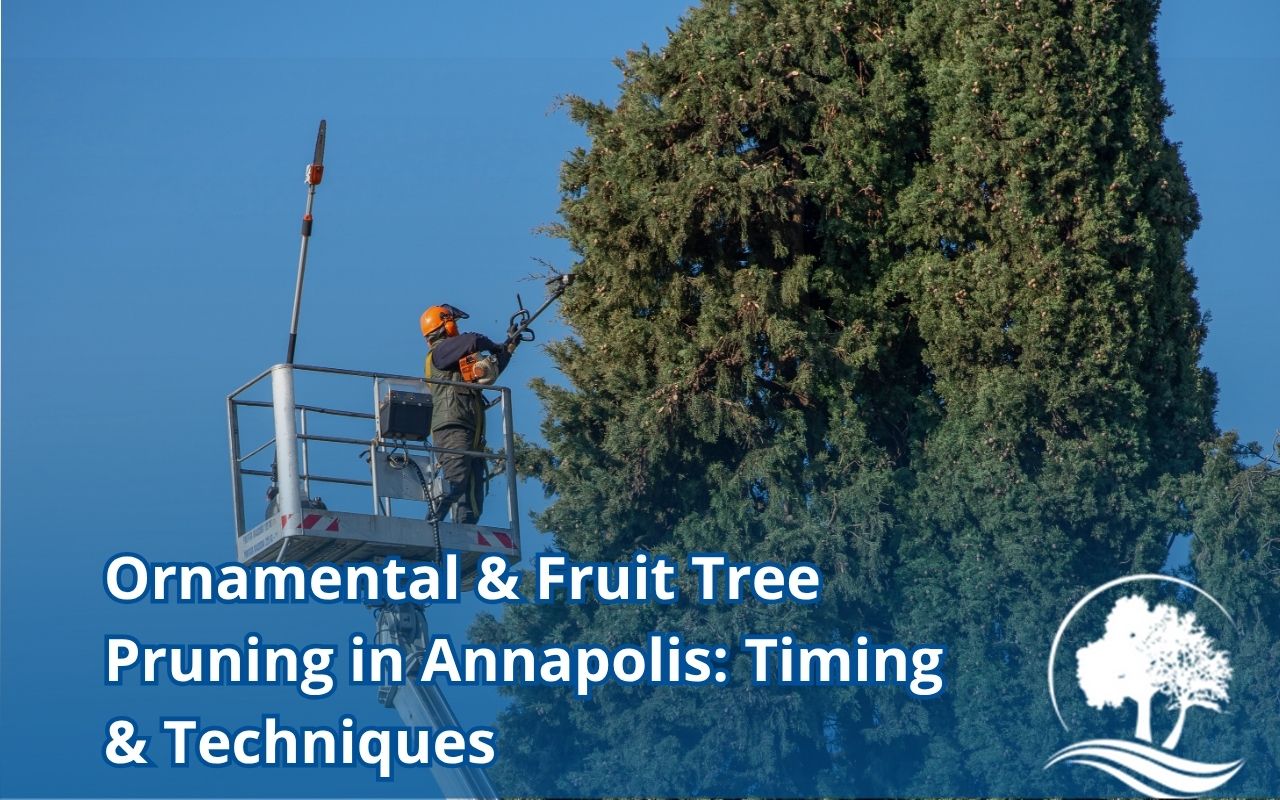
Ornamental & Fruit Tree Pruning in Annapolis: Timing & Techniques keeps local trees healthy, safe, and productive. Annapolis gardens face waterfront winds, salt spray, and sudden thaws. Smart timing and precise cuts support structure and fruiting while protecting ornamental form. Whether you’re new to thinning or practicing spur pruning, this guide explains how to match methods to our microclimate.
Why pruning matters in Annapolis
In Ornamental & Fruit Tree Pruning in Annapolis: Timing & Techniques, balance is everything. Thoughtful cuts increase airflow, reduce disease, and help canopies resist gusts. Strategic thinning opens light pathways without ruining shape. Focused spur pruning channels energy to fruiting buds, improving next season’s yield despite waterfront winds.
- Improve storm resilience with balanced scaffolds.
- Speed leaf drying to reduce fungal pressure.
- Direct energy into flowers and fruit spurs.
Explore local services via Tree Pruning Annapolis, MD for expert help.
Best timing for ornamental trees
Late winter to early spring is ideal for most ornamentals. Prune during dormancy to minimize sap loss and stress. Remove dead, rubbing, or crossing branches before buds swell. After flowering, use light touch-ups to preserve blooms. Adjust dates if waterfront winds trigger early warming.
- Finish major cuts by late winter.
- Skip heavy summer work during heat or drought.
- Reserve structural changes for dormancy windows.
Techniques for ornamentals: a simple sequence
Ornamental & Fruit Tree Pruning in Annapolis: Timing & Techniques favors clean tools and clean cuts. Start at the trunk, moving outward to protect the branch collar. Remove hazards first, then thin dense areas, then shape.
- Deadwood first: eliminate diseased or torn limbs.
- Thinning next: open the canopy without topping.
- Shaping last: refine symmetry and clearance.
Fruit trees: structure, health, and yield
Spur pruning is crucial for apples and pears, while selective thinning boosts light and airflow. Never remove more than one-third in a season. Build a sturdy framework to withstand waterfront winds and protect tender shoots from salt burn.
- Remove weak, shaded, or inward-growing shoots.
- Favor wide branch angles for strength.
- Leave short fruiting spurs on productive wood.
When to prune fruit trees
Plan major work from late February to early April, before bud break. Pruning too late risks excessive sap flow; too early exposes cuts to deep freezes. Make sanitary cuts anytime to remove water sprouts or diseased wood, but save structural changes for dormancy.
Espalier vs. open-center training
Choose the style that fits space and goals. Espalier flattens growth against wires—great for patios. Open-center removes the leader to form a fruit-friendly bowl. Both rely on accurate spur pruning and careful thinning to maintain light in the crown.
- Espalier: tie new laterals horizontally and remove competing verticals.
- Open-center: keep three to five main scaffolds; thin interior shoots.
- Review annually to preserve spacing and airflow.
Common Annapolis challenges
Wind-splitting, salt scorch, and over-pruning are frequent. Make cuts just outside the branch collar. After storms, remove torn limbs quickly. If a tree is stressed, limit work to dead or diseased wood for two seasons before reshaping.
Tools that make pruning safer and cleaner
Ornamental & Fruit Tree Pruning in Annapolis: Timing & Techniques depends on sharp, sanitary tools. Use hand pruners for twigs, loppers for medium wood, and a fine-tooth saw for larger limbs. Disinfect between cuts on infected trees, and wear gloves, glasses, and a helmet for overhead work.
- Hand pruners, loppers, and pruning saw.
- Pole pruner and stable ladder for reach.
- Bleach solution or sterilizer for sanitation.
Post-pruning care tips
Mulch to conserve moisture, but keep it off the trunk. Water deeply after major work. In spring, apply balanced fertilizer, avoiding excess nitrogen. Inspect monthly for scale or fungal spots and treat early with oils or organic sprays.
Frequently Asked Questions
What is the difference between thinning and heading cuts?
Thinning removes a branch at its origin to open the canopy. Heading shortens a branch, stimulating dense regrowth. Thinning is preferred for airflow and structure.
How often should I perform spur pruning on apples?
Annually during dormancy. Shorten last year’s shoots to maintain productive spurs without exhausting the tree.
Do waterfront winds change pruning timing?
Yes. Finish major cuts earlier if warm spells arrive, and prioritize strong scaffolds to resist gusts.
Can I prune during bloom?
Limit to light touch-ups to avoid losing flowers. Schedule structural work before bud break or right after bloom.
Is topping ever recommended?
No. Topping weakens structure and invites decay. Use selective thinning and reduction cuts instead.
Next steps for your trees
Ready to act on Ornamental & Fruit Tree Pruning in Annapolis: Timing & Techniques? For tailored guidance, explore Tree Pruning Annapolis, MD or contact our arborists to plan your seasonal work.