
Maryland summers can make trees look normal while heat, dry soil, and sudden storms weaken their support. At Dream Tree Service LLC, we look for visible warning signs and hidden risk factors before damage reaches a roof, driveway, or utility area. For help planning the next step, visit our tree care team in Baltimore.
Why Do Tree Stability Concerns Increase During Maryland Summers?
Tree stability concerns increase when heat, dry soil, heavy rain, wind, decay, or root damage reduce a tree’s support. With Dream Tree Service LLC, you get clear guidance on what looks risky, what needs monitoring, and when a professional inspection is safer.
Tree stability concerns involve the condition of a tree’s roots, trunk, canopy, and surrounding soil. Homeowners need this review when trees lean, crack, lose branches, or sit near structures. The goal is to find risks early, reduce storm damage, and protect people, vehicles, buildings, and nearby landscapes.
Spot Early Summer Tree Stability Issues Before Storms Arrive
Early summer tree stability issues often appear as small changes in lean, bark, soil, or canopy shape. These signs matter because storm wind can turn a weak area into a sudden hazard. A careful review helps you decide whether pruning, monitoring, support, or removal may be needed.
Look around the tree after hot days, heavy rain, or strong wind. Check for fresh soil lifting near the trunk, exposed roots, large dead limbs, and cracks that were not visible before. If branches are overgrown or uneven, our tree trimming support can help improve balance when trimming is the right option.
- New or growing lean toward a structure
- Deep trunk cracks or splitting limbs
- Dead branches hanging above walkways
- Mushrooms or soft wood near the base
- Soil gaps around the root flare
Recognize Heat-Weakened Trees With Safer Maryland Yard Checks
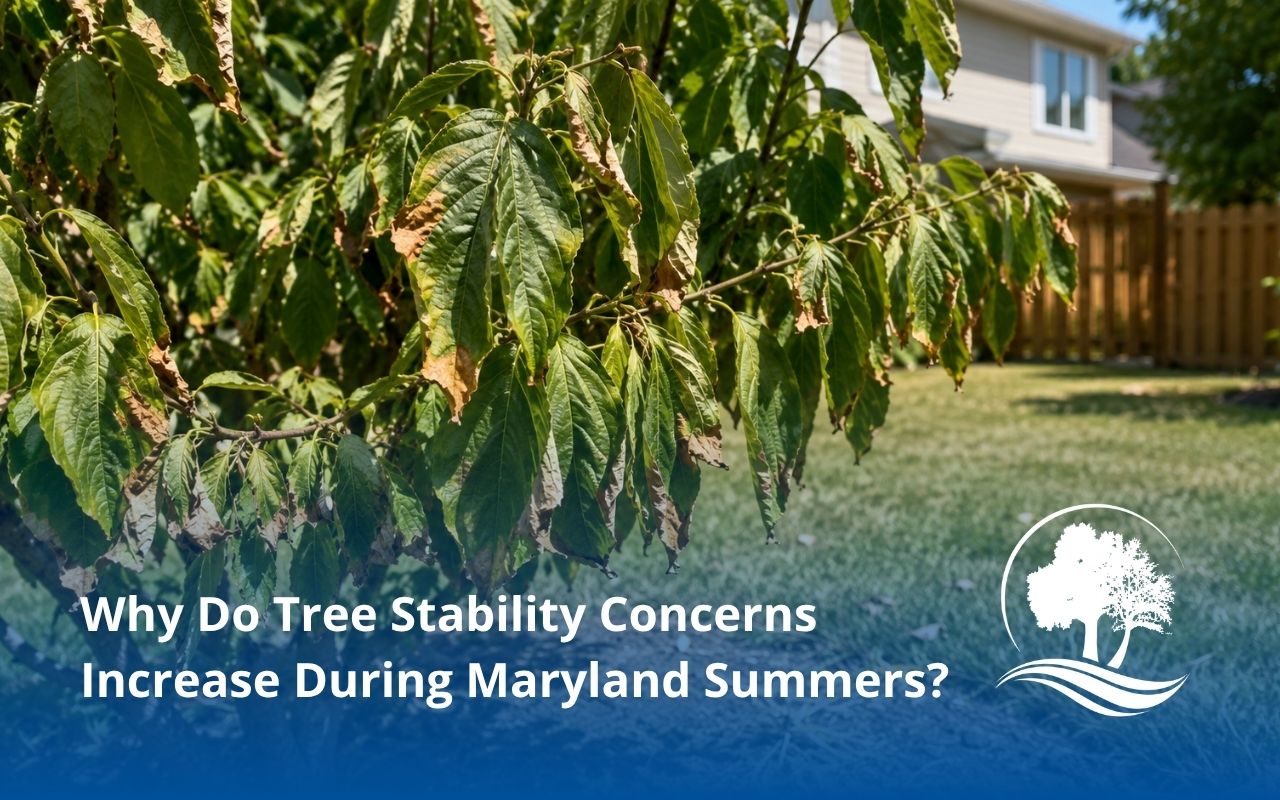
Heat-weakened trees may lose moisture faster than roots can replace it. This stress can reduce leaf health, slow recovery, and make existing defects more serious. Heat alone may not make a tree fail, but heat combined with decay, weak roots, or wind can raise risk.
During summer, review trees when the ground is dry and again after rain. Leaves that wilt, brown early, or thin out may point to stress. Bark cracks, pest activity, and brittle limbs can also show that the tree is struggling. Do not cut large limbs yourself when branches are high, heavy, or close to wires.
Better Homes & Gardens has also advised homeowners to assess trees for storm readiness during summer care. That advice supports a simple rule: watch trees before the weather turns severe, not after damage happens.
Prepare Tree Stability Before Hurricane Season With Careful Planning
Tree stability before hurricane season should include checking roots, canopy weight, trunk defects, and nearby targets. Planning ahead is safer than waiting for urgent storm damage. A tree close to a home, driveway, fence, or power line needs special attention before strong weather arrives.
NC State Extension notes that storm damage prevention includes avoiding weak branch structures and managing tree health before hurricanes, tornadoes, or ice storms. Purdue Extension also warns that trees touching utility lines should be treated as dangerous. Keep people away from damaged trees near wires.
- Prune weak branches only when proper cutting is safe.
- Remove dead limbs before wind can break them.
- Keep mulch away from direct trunk contact.
- Watch drainage areas where soil may soften.
- Request help before a risky tree shifts further.
If a tree no longer appears safe, our guide on removing trees from property explains how careful planning can protect nearby features.
Review Root And Trunk Defects With Practical Inspections
Root and trunk defects are serious because they affect the tree’s main support system. A tree can have green leaves and still hide decay, root rot, cavities, or weak unions. A practical inspection compares the tree’s structure with its location and possible targets.
Start at the base. The root flare should be visible, not buried under heavy soil or piled mulch. Soft soil, erosion, root wounds, and fungal growth may signal weak anchoring below ground. Then look up the trunk for cavities, peeling bark, dark wet spots, or long cracks.
At Dream Tree Service LLC, our crew can explain whether a defect looks minor, needs monitoring, or needs immediate action. Some trees benefit from selective pruning or support. Others are safer to remove when severe decay, major root loss, or a fast-growing lean is present.
Schedule A Clear Tree Assessment Before Risk Grows
A clear assessment helps homeowners understand what happens after they ask for help. The process should be simple, focused, and based on the visible condition of the tree. When customers call Dream Tree Service LLC, we first ask about location, warning signs, storm history, and nearby risks.
During the appointment, we check the tree from the ground up. We look at the root zone, trunk, branch unions, canopy weight, and surrounding property. Then we explain safe repair options, trimming needs, support concerns, or removal planning when the tree cannot stay safely.
- Share photos, tree location, and visible concerns.
- Review nearby homes, wires, vehicles, and walkways.
- Inspect lean, roots, trunk cracks, and canopy balance.
- Discuss trimming, monitoring, support, or removal.
- Choose the next step before the damage gets worse.
For urgent questions or scheduling, use our contact our crew page.
Frequently Asked Questions
What are the first signs of unstable trees?
Early signs include a new lean, lifting soil, deep trunk cracks, dead hanging limbs, fungal growth, or sudden canopy imbalance. These signs do not always mean removal is needed, but they do mean the tree should be checked before wind or heavy rain adds pressure.
When should I inspect trees before hurricane season?
Inspect trees before severe weather becomes likely, especially in late spring or early summer. Tree stability before hurricane season gives time to trim weak limbs, review root concerns, and plan next steps. For scheduling help, visit our contact our crew page.
Can trimming improve tree stability during summer storms?
Trimming can improve stability when it removes dead, weak, crossing, or heavy branches without overcutting. The goal is better balance and less wind pressure. If your trees need careful shaping, our tree trimming support page explains related service options.
Should a leaning tree always be removed immediately?
A leaning tree does not always need immediate removal. A long-standing lean may be stable, while a new or growing lean can signal root movement. If the tree has cracks, soil gaps, or decay, review removing trees from property for safer planning.
Do mushrooms near tree roots show serious decay?
Mushrooms near the base can signal root or trunk decay, but they do not prove the tree is unsafe by themselves. The concern becomes stronger when fungi appear with soft wood, soil movement, thinning leaves, or leaning. A closer inspection helps confirm the risk.
Protect Your Property With A Timely Tree Review
Tree stability concerns are easier to manage when you act before storms expose the problem. When you contact Dream Tree Service LLC, we can review visible warning signs, explain practical options, and help you choose a safer next step. Start with our contact our crew page before the risk grows.
References
- Preventing & Managing Storm Damaged to Trees
- Spring Storms Are Coming: How to Reduce Tree Damage and Risk