
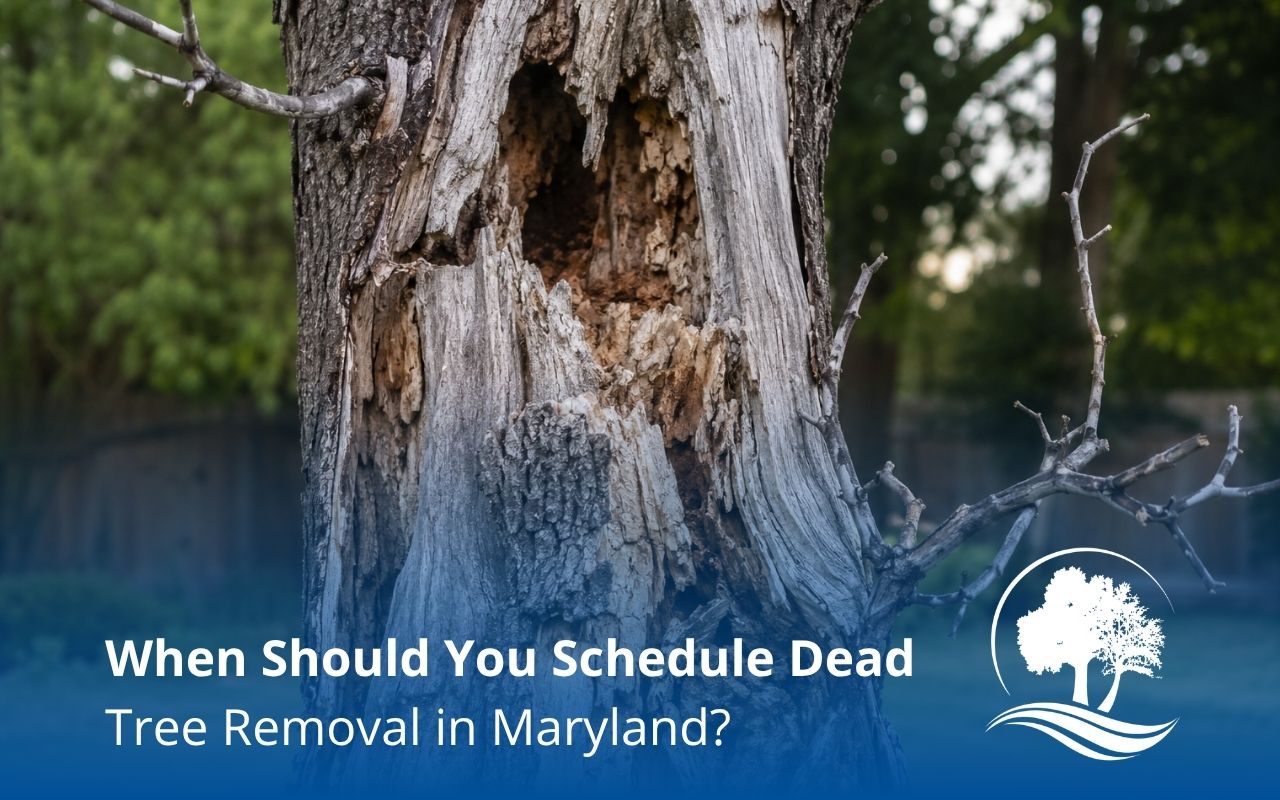
Dead trees can look calm from a distance, yet one weak trunk or hanging limb can turn a normal Maryland storm into a property problem. If you see bare branches, peeling bark, fungus, or sudden leaning, contact our team before the next round of wind, rain, or snow adds more pressure.
When Should You Schedule Dead Tree Removal in Maryland?
Schedule dead tree removal in Maryland when a dead tree stands near people, buildings, driveways, fences, or walkways. Early removal lowers the risk of falling limbs, trunk failure, pest spread, and storm-related damage before the tree becomes harder to control.
Dead tree removal is the careful process of taking down a tree that no longer lives, grows leaves, or holds stable structure. Homeowners need this service when dead wood, weak roots, decay, or storm stress can threaten safety, damage property, or affect nearby healthy trees.
Dead Tree Removal in Maryland Reduces Property Risk
Dead tree removal in Maryland helps protect homes, cars, fences, outdoor spaces, and nearby trees from preventable damage. Once a tree dies, the trunk, limbs, and roots keep weakening. That makes the tree less predictable during wind, rain, snow, and wet soil conditions.
Maryland weather can place heavy stress on a dead tree. Rain softens soil around weak roots. Snow adds weight to brittle branches. Wind can twist a dry trunk until it cracks or falls. Dead wood does not recover strength over time, so waiting often increases the risk.
At Dream Tree Service LLC, we look at the tree’s location, height, lean, trunk condition, and nearby targets before explaining the safest next step. A tree beside a home, garage, driveway, sidewalk, or play area needs faster attention than a dead tree in an open space.
- Dead limbs may fall during storms or calm weather.
- Weak roots can lose their hold in wet soil.
- Decay can spread inside the trunk before it is visible.
- Insects and fungus may move into nearby trees.
For homeowners ready to compare service options, our tree removal services page can help you understand when removal is the safer choice.
Dead Tree Danger Signs Reveal Problems Before Storms
Dead tree danger signs often appear before a full tree failure happens. Bare branches, peeling bark, trunk cracks, mushrooms, insect holes, soft wood, and sudden leaning all deserve attention. These signs help homeowners decide when to request service before conditions become urgent.
Look closely during the growing season. A tree with no leaves while nearby trees are full may be dead or severely stressed. Bark falling in large sheets can also show that the outer layer is no longer active. Large dead branches over daily-use areas should not be ignored.
According to the USDA Forest Service, hazard trees may have structural defects that make them likely to fail in whole or in part. The same source notes that dead trees, damaged limbs, bark loss, conks, and woodpecker holes can point to internal rot or defects.
- No leaves during normal growing months
- Peeling bark or large bare trunk areas
- Cracks, splits, or hollow-sounding wood
- Mushrooms or fungus near the base
- Sawdust, insect holes, or heavy woodpecker activity
- New leaning or raised soil near roots
When customers contact Dream Tree Service LLC, we ask what they see, where the tree stands, and whether recent storms changed the tree’s shape. Clear photos can also help us understand the concern before a visit is planned.
Hazardous Dead Tree Conditions Increase Safety Concerns Fast
A hazardous dead tree creates risk because it can fall on people, buildings, vehicles, utility areas, fences, or outdoor spaces. The danger depends on the tree’s condition, size, lean, and distance from anything that could be damaged if the tree fails.
Location is one of the biggest decision factors. A dead tree deep in the woods may not create the same concern as one beside a bedroom, garage, road, walkway, or patio. The closer the target, the higher the concern, especially during Maryland storm seasons.
Anne Arundel County’s Hazard Tree Fact Sheet explains that hazard trees can damage property or threaten lives. It also lists broken stems, cracks, lifting roots, mushrooms, and fungal conks as warning signs homeowners should monitor.
Our team at Dream Tree Service LLC checks visible structure first, then explains what may make the tree unstable. We do not need to make the tree sound worse than it is. The goal is to help you understand real risk, safe access, and practical removal choices.
Sudden Tree Death in Maryland Signals Hidden Stress
A tree died suddenly in Maryland often because hidden stress was building before the tree looked dead. Drought, heavy rain, root damage, compacted soil, insects, fungus, construction impact, and storm wounds can weaken a tree from the inside or below ground.
Some trees decline slowly, then seem to fail all at once. Roots may have been damaged by poor drainage, soil changes, or nearby work. Insects can feed under bark while the upper tree still looks normal. Disease may also block water and nutrients before leaves turn brown.
Maryland yards can face fast weather changes. Long dry periods may stress roots. Heavy rain may follow and loosen already weak soil. Freezing temperatures can add cracks to damaged wood. A sudden change in leaf growth is a reason to schedule a closer look.
- Storm stress can break limbs or open trunk wounds.
- Root problems can reduce support and water flow.
- Insects may weaken hidden wood tissue.
- Fungus may signal decay near the base.
- Compacted soil can limit oxygen around roots.
After a dead tree is found, we also recommend looking at nearby trees. The dead tree may be the only problem, but pests, drainage issues, or soil stress may also affect other parts of the yard.
Timely Removal Choices Protect Nearby Trees and Structures
Timely removal helps protect both property and the living landscape around the dead tree. A dead trunk can attract insects, support fungus, drop limbs, or fall into healthy trees. Removing it early lowers safety risk and keeps the yard easier to maintain.
Dead trees can still play a role in natural wooded areas, but residential yards need a different decision. A dead tree near a house, parking area, fence, walkway, or neighbor’s property creates a service need because people and structures are within reach.
With Dream Tree Service LLC, you get guidance based on the tree’s setting, not a one-size answer. We look at what the tree could hit, how brittle it appears, and whether surrounding trees may be affected by pests, decay, or falling limbs.
Homeowners should remove dead tree in MD when the tree is near a roof, fence, driveway, walkway, parking area, or neighbor’s property. A tree that has been dead for a long time may become harder to remove because brittle wood can break unpredictably.
Our Service Process Prepares Homeowners for Safe Removal
A clear removal process helps homeowners know what to expect before booking service. We first review the tree concern, ask where the tree stands, check visible hazards, explain possible removal needs, and help you decide the next step without pressure.
When you contact us, we ask simple questions about the tree’s size, location, lean, visible damage, and nearby obstacles. Photos can help if they show the whole tree and the base. Before work begins, we explain what should stay clear around the tree.
- Share the tree location and visible warning signs.
- Tell us what buildings, fences, or wires are nearby.
- We review access, risk, and removal needs.
- Before cutting, the work area must stay clear.
- After removal, we help you understand cleanup options.
Dead trees can react differently during cutting because the trunk may be dry, hollow, or cracked. That is why safe planning comes before cutting. We may remove branches first, reduce weight, and manage larger sections with care when conditions require it.
When you choose Dream Tree Service LLC, we explain the practical details before moving forward. For scheduling questions or next steps, use the contact our team page and tell us what you see.
Frequently Asked Questions
How do I know if a dead tree is dangerous?
A dead tree may be dangerous when it leans, has cracks, drops large limbs, grows fungus near the base, or stands close to people, buildings, driveways, or walkways. For related service guidance, review our tree removal services.
When should I remove a dead tree in Maryland?
You should remove a dead tree in Maryland when it can reach a house, fence, garage, road, walkway, vehicle, or outdoor living area. Fast action is also smart when the tree shows new leaning, root lifting, or trunk cracks.
What happens if I leave a hazardous dead tree standing?
Leaving a hazardous dead tree standing can lead to falling limbs, trunk failure, pest activity, property damage, and difficult cleanup after storms. To request help with the concern, use the contact our team page.
Why did my tree die suddenly after looking healthy?
A tree may die suddenly after hidden root damage, drought stress, disease, insects, fungus, soil compaction, or storm wounds. The damage can build below the surface before leaves, bark, or branches show clear warning signs.
How can I reduce future dead tree problems?
Walk your yard after storms, watch for dead tree danger signs, and act before weak limbs or trunks fail. You can also learn more about local care options through our local tree care support.
Plan Safer Yard Decisions Before Property Damage Spreads
Fast attention to dead trees helps protect your home, yard, and nearby healthy trees before weather turns a concern into damage. If you need dead tree removal in Maryland, contact our team through contact our team and share what you are seeing.