
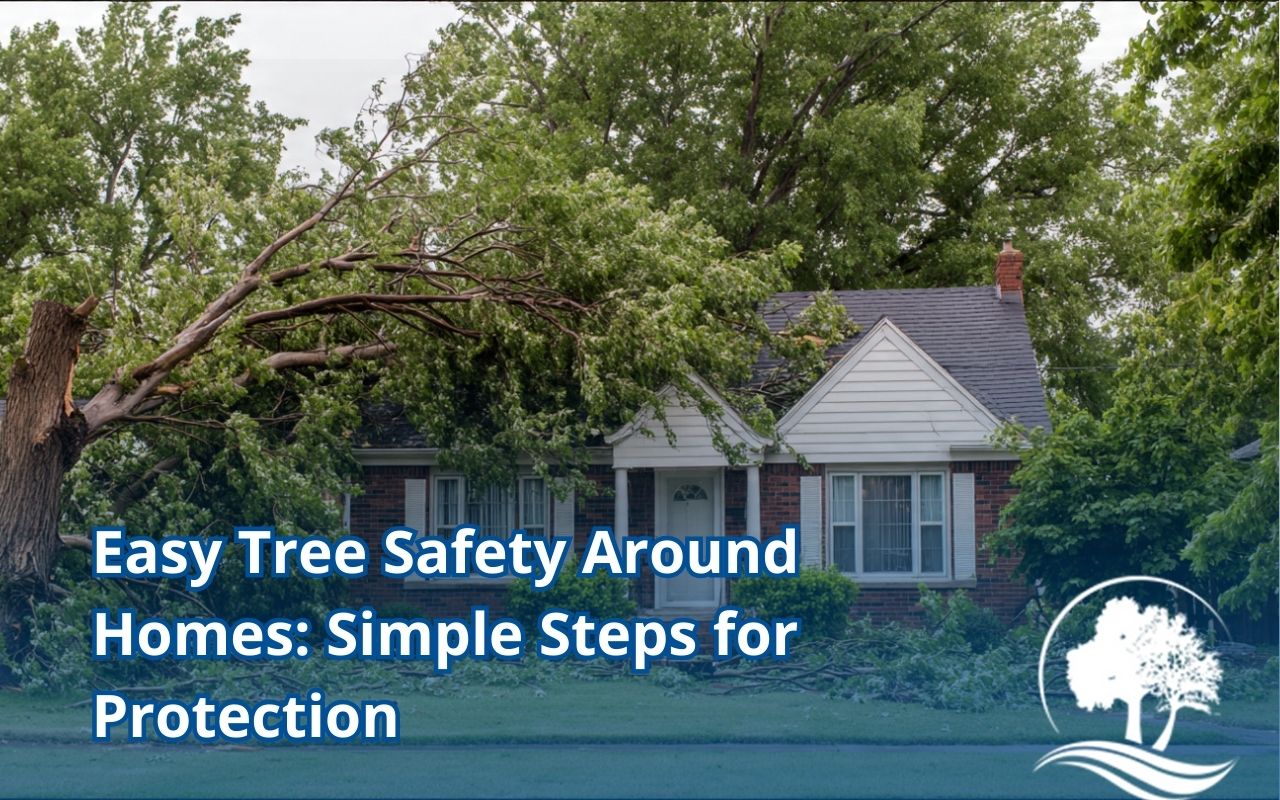
Trees around a home can add shade and charm. However, they can also cause trouble during storms.
With tree safety around homes, you can lower risks and protect what matters. By spotting issues early, you keep trees as helpful features, not threats.
Understanding Tree Risks Near Homes
Trees near houses can look peaceful. Still, they can hide serious issues for your property. Dream Tree Service LLC often sees problems that start small and grow fast.
- Branches near roofs or windows can snap in wind or snow.
- Falling limbs can hurt people and damage cars or decks.
- Weak trunks can fail without much warning.
- Leaning trees may shift and fall during heavy storms.
Another concern is foundation damage from trees. Roots chase water and can lift walks and driveways. As a result, soil can dry unevenly and shift. That movement can stress your foundation. So, knowing the risks is the first step toward tree safety around homes.
Safe Distances for Planting Trees Around Homes
Choosing the right spacing helps prevent future repairs. Dream Tree Service LLC recommends planning for the tree’s full size, not its current height.
- Small trees: plant about 10–15 feet from the house.
- Medium trees: plant about 20–30 feet from the house.
- Large shade trees: aim for 30–40 feet from structures.
Also, consider wires above and pipes below. When you follow a safe tree distance, trees grow with fewer conflicts. Therefore, tree safety around homes becomes easier to maintain long term.
Signs of Potential Tree Hazards
Quick checks can stop big problems later. Dream Tree Service LLC suggests watching for changes after storms, drought, or heavy rain.
- Cracks or splits in the trunk.
- Bark peeling in wide patches.
- A lean that gets worse over time.
- Dead or hanging limbs.
- Thin growth at the top of the canopy.
In addition, cavities near the base can point to rot. Because of that, early action can reduce trees near houses risks before they become urgent.
Regular Tree Care Practices
Healthy trees fail less often. So, simple care steps can support tree safety around homes with less effort.
Water young trees during dry weeks. Then, add mulch in a ring, but keep it off the trunk. Also, check for insects and disease as seasons change. Finally, remove dead limbs quickly to help the tree recover.
Pruning and Trimming That Protects Your Home
Pruning is more than looks. Instead, it helps lower the chance of breakage during storms. Dream Tree Service LLC focuses on safe, clean cuts that help trees heal well.
By thinning crowded branches, wind can pass through more easily. Also, trimming limbs away from roofs helps protect shingles and gutters. Therefore, a simple pruning plan supports long-term tree safety around homes.
Professional Tree Checkups
Some risks are hidden inside a trunk or below the soil. For that reason, a trained pro can spot weak points you might miss.
Dream Tree Service LLC can guide decisions on trimming, treatment, or removal. If you want to learn about underground problems, review tree root issues that can affect your home. Likewise, you can explore tree stability concerns to watch for near homes to understand warning signs.
Dealing With Root Growth Safely
Roots near structures can be stressful to manage. However, cutting large roots the wrong way can make a tree unstable.
Instead, consider barriers that guide roots away from key areas. For safer planning, see tree root system protection methods for safer landscapes. As a result, you can lower the chance of foundation damage from trees while keeping trees healthier.
Emergency Readiness for Storm Damage
Even strong trees can fail in extreme weather. So, keep a simple plan ready.
- Pick safe zones away from large limbs.
- Save a local service number for fast help.
- Take seasonal photos to track changes.
- Review insurance coverage for storm damage.
If you need fast help after a fall, Dream Tree Service LLC offers support options like tree removal services in Baltimore for storm and safety needs. If you are closer to Towson, you can also review tree removal in Towson MD when a tree becomes a hazard.
Frequently Asked Questions
How do I improve tree safety around homes after a storm?
First, look for hanging limbs and new cracks. Then, keep people away until a pro checks the tree.
What are the biggest trees near houses risks?
Common risks include falling limbs, leaning trunks, and roots pushing on hard surfaces or drains.
Can foundation damage from trees happen with healthy trees?
Yes. Even healthy roots can shift soil or lift surfaces if the tree is too close to the home.
What safe tree distance should I use for a large shade tree?
Aim for about 30–40 feet from structures. Also, avoid planting under power lines.
When should I call Dream Tree Service LLC for an inspection?
Call when you see a new lean, dead limbs, or trunk cracks. Also, call before major pruning work.
Keeping Your Home Secure With Smart Tree Care
Tree safety around homes improves when you plan spacing and spot problems early. With routine care, you reduce trees near houses risks and protect your property.
Dream Tree Service LLC can help with assessments, trimming, and risk planning. For a direct next step, use the contact page to discuss tree safety near your home.