
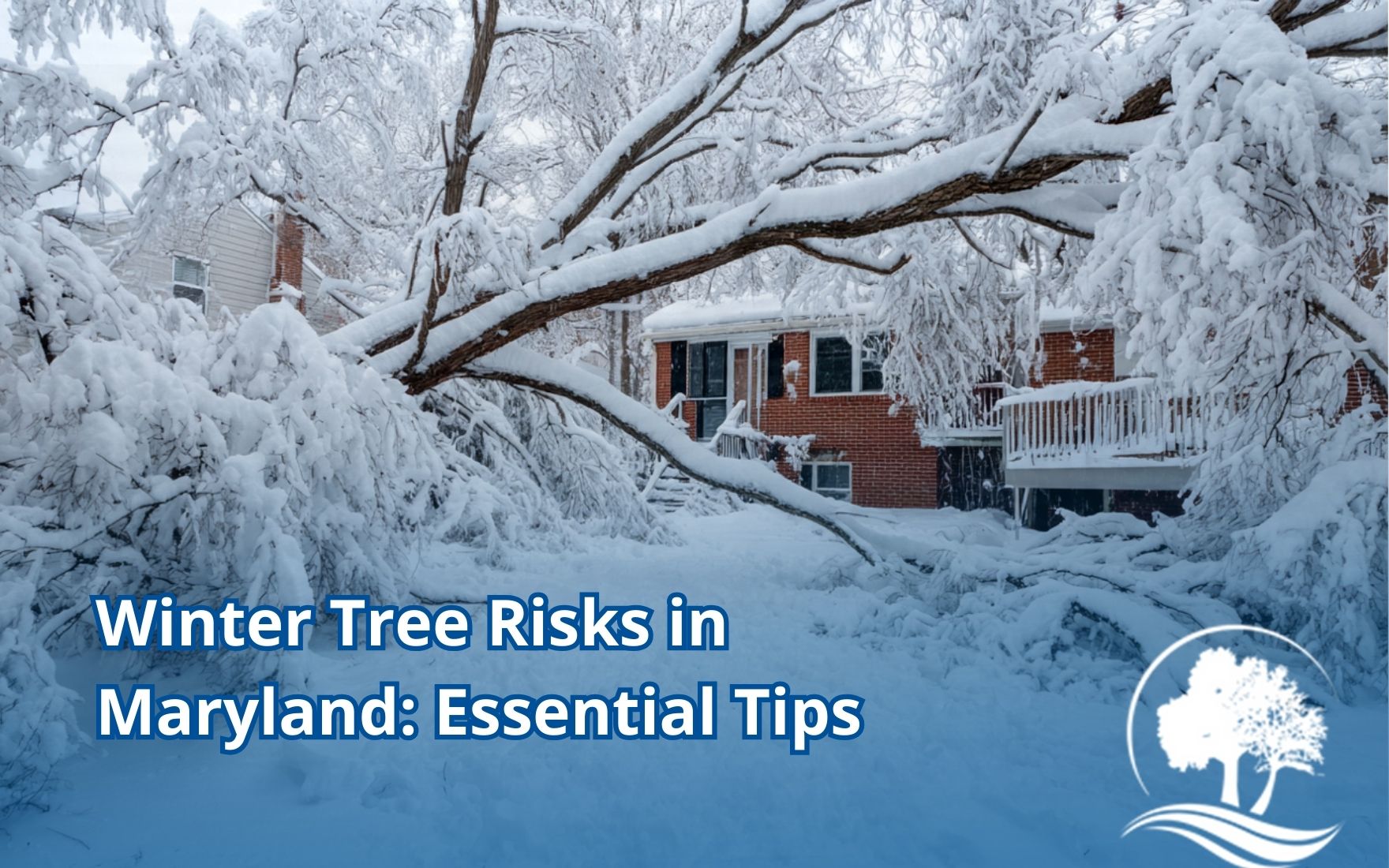
Winter tree hazards in Maryland can turn a calm yard into a sudden safety issue. Therefore, it helps to know what winter weather can do to trees.
Trees may look magical under snow. However, that weight can snap limbs or topple trunks. Ice can also coat branches and weaken wood. As a result, you may face cleanup, repairs, and blocked access around your home.
Identifying Common Winter Tree Hazards
In winter, Maryland often sees wet snow, freezing rain, and wind. Because of that mix, Winter tree hazards in Maryland can show up fast, even overnight.
Watch for stressed limbs, lifted soil, and new cracks. Also, pests and disease can worsen weak wood during warm breaks.
- Check for fresh splits where branches meet the trunk.
- Look for frost heave that exposes roots near the base.
- Scan for hollow sounds that may suggest hidden decay.
Understanding Snow Load and Its Impact
Wet snow adds heavy pressure to the canopy. In addition, Snow load risks rise when snow packs into forks and tight branch angles.
Damage often starts high, then spreads lower like a chain reaction. If you can reach a limb safely, brush snow off gently with a soft tool.
- Clear reachable limbs after storms, when conditions are safe.
- Avoid shaking branches, since sudden force can cause breaks.
- Learn more about safe responses in heavy snow branch risks.
Signs of Potential Branch Failure
Spotting warning signs early can prevent costly damage. For example, cracks along a limb or a split at the collar can signal trouble.
Dark, wet bark spots may point to rot. Likewise, dead leaves that cling in odd patches can suggest internal decay. When risk is high, Winter branch failure may happen without much warning.
Preemptive Tree Pruning Techniques
Targeted pruning removes weak limbs before winter peaks. As a result, Winter tree hazards in Maryland become easier to manage around roofs, drives, and walkways.
Prune in late fall using clean, sharp tools. Then cut just outside the branch collar for better healing. For taller trees, consider calling Dream Tree Service LLC for safer, higher cuts.
Evaluating Tree Stability
Stability problems often begin at the roots. Therefore, check the base for soil lifting, exposed roots, or fresh leaning after storms.
Tap the trunk and listen for hollow tones. Also, inspect the root flare for cracks and decay. If you want a simple checklist, review tree health indicators.
Importance of Proper Tree Maintenance in Winter
Good habits keep trees stronger through cold months. Moreover, small actions can reduce stress after ice and snow events.
Water young trees before the ground freezes. Then mulch evenly to protect roots, but keep mulch off the trunk.
- Remove fallen limbs quickly to limit pests and fungus spread.
- Skip winter fertilizing, since trees are dormant.
- Plan ahead with winter storm tree prep in Baltimore.
Dealing with Ice Damage Remediation
After ice, wait until conditions are safe. Then let ice loosen naturally. Ice damage to trees can worsen if you chip or strike frozen limbs.
Once the ice melts, prune broken sections back to healthy wood. Also, disinfect tools between cuts. For guidance on storm patterns and recovery, see ice storm tree damage.
Emergency Tree Care Strategies
When a storm hits, safety comes first. So keep away from hanging limbs and never touch branches near power lines.
Block off the area and document damage for insurance. Then call qualified help if a limb threatens your home.
- Stay clear of tensioned wood that can snap back.
- Contact your utility provider if lines are involved.
- Consider removal support via tree removal annapolis md.
Collaborating with Professional Arborists
A trained arborist can spot subtle defects you may miss. In addition, they have the gear to work safely in winter conditions.
Ask about insurance, credentials, and a seasonal plan. Then schedule checkups for high-risk trees near structures and walkways.
Frequently Asked Questions
How do I reduce Winter tree hazards in Maryland after a snowfall?
Brush reachable snow off gently and avoid shaking limbs. Also, inspect for cracks and new leaning.
What are the first signs that a limb might break?
Look for fresh splits, sagging branches, and dark bark spots. Additionally, watch for sawdust-like debris near the limb.
Should I remove ice from branches right away?
No, wait until it loosens naturally. Otherwise, you can damage bark or trigger a break.
When is pruning safest before winter storms?
Late fall is ideal, after leaf drop and before heavy snow. For large trees, hire a pro for safer cuts.
When should I call a professional instead of handling it myself?
Call if limbs hang over structures, the tree leans more than before, or any wood is near power lines. For help, reach out through Dream Tree Service LLC contact.
Keeping Trees Safe and Beautiful All Winter
With smart inspections, pruning, and safe cleanup, Winter tree hazards in Maryland become far less stressful. Therefore, you can protect your home, your yard, and the trees you value.
Act early, and respond safely after storms. That way, you reduce damage and support healthier growth when spring returns.